
What Are Intangible Assets: A Comprehensive Guide

What are intangible assets? They are non-physical resources a business owns or controls that can create future value. Common items include brand-related rights, customer agreements, and specific software or proprietary methods. You cannot touch them like equipment or inventory, but they can still influence revenue, costs, and risk. This guide explains what qualifies, how to group them, how valuation works, and how they affect accounting and planning.
What Are Intangible Assets In Today’s Economy?
Many companies compete on trust, repeat customers, exclusive rights, and dependable delivery. Those advantages often come from intangible assets rather than physical property.
A quick practical check is to ask what would be hardest to replace if it disappeared. If the answer is your customer base, your protected name, or the system that keeps operations consistent, those are core value drivers.
Cash Flow Frog for different types of businesses - Image | Cash Flow Frog
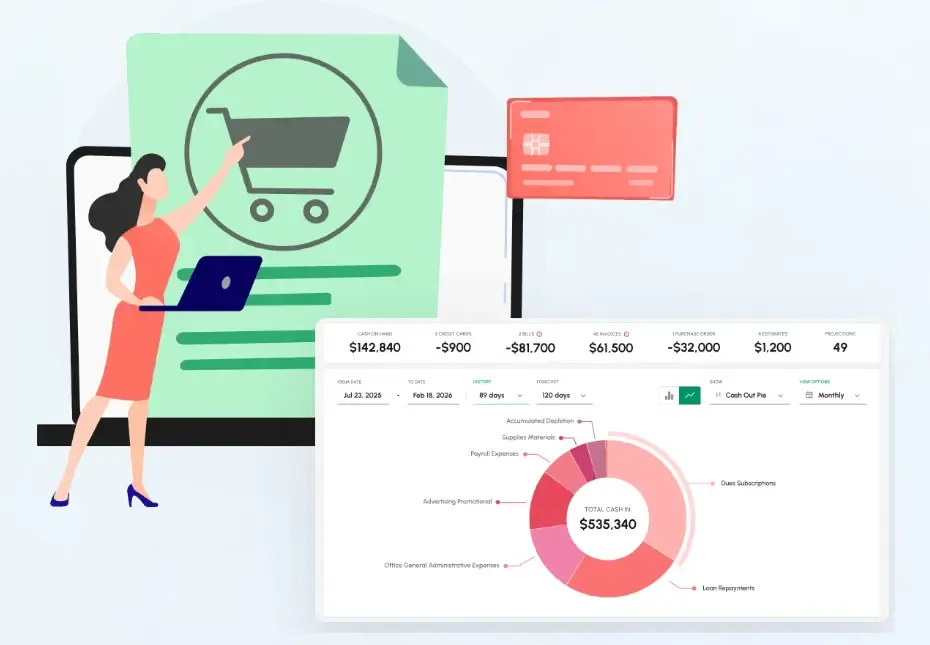
This matters across different business types, from service firms and agencies to subscription companies, ecommerce brands, and project-based teams. Tools like Cash Flow Frog are built with those models in mind, since cash timing often depends on renewals, invoices, and contract terms, not just sales volume.
That is why the question of what are intangible assets matter to owners, finance teams, and buyers, not only accountants. It also affects decisions like where to invest, what to protect legally, and what to document so value does not walk out the door when people leave.
Core Characteristics That Define An Intangible Asset
The definition of intangible assets is not “anything you cannot touch.” In practice, an item generally needs to be identifiable, controllable, and expected to provide future economic benefits. Together, those elements form the intangible assets definition used in reporting and valuation.
The Criteria Of Identifiability
Identifiable means the resource can be described clearly and separated from the business in a practical way.
This often exists because the item can be sold or licensed on its own, or because it is backed by contractual or legal rights. Trademarks and licensing agreements fit this well because ownership and rights can be documented.
Control Over The Resource
Control is the part where things get real.
What matters is whether you can back it up when someone asks. If a partner pushes a boundary, if a customer disputes a right, if you’re in diligence and someone wants proof, can you pull the document up fast and point to the exact clause? Or does everyone start forwarding old emails and guessing?
If you asked your team, “Where’s the latest agreement?” or “Who’s allowed to approve this?” Would you get one clear answer? If it’s three different answers, or “I think it’s in someone’s Drive,” you don’t really have control yet. You just haven’t had to prove it.
Existence Of Future Economic Benefits
The resource should be expected to deliver future benefits such as higher sales, lower costs, or stronger retention. This is where the meaning of intangible assets becomes measurable, not abstract.
A simple management test is whether losing the resource would hurt results in a way you can explain. That is also the most practical way to define intangible asset meaning for decision-makers.
Identifying The Different Categories Of Intangibles
Most organizations can map their non-physical value into a few categories. Below are categories and examples of intangible assets that are easy to recognize and document.
Marketing-Related Assets: Trademarks And Logos
Marketing-related resources include trademarks, logos, and trade names. They matter because recognition reduces customer uncertainty and can support pricing and retention.
Documentation is usually straightforward because these rights often have registrations and usage rules. For management purposes, it also helps to track where brand assets are used, who approves changes, and whether usage is consistent across channels.
Customer-Related Assets: Lists And Relationships
Customer-related resources include customer lists, customer contracts, subscription bases, and ongoing customer relationships. The list is data. The relationship is the repeat behavior behind it, such as renewals and repeat purchasing.
This is one of the clearest examples of intangible assets in business, especially for services and subscriptions, because customers sticking around is the whole point. Track churn, renewal dates, and whether too much revenue comes from a few accounts.
A signed agreement and a solid renewal history beat “they’ll probably renew” every time, especially when someone asks for proof.
Contract-Based Assets: Licensing And Franchises
Contract-based resources are the rights you get because you have an agreement in place. That could be a license, a franchise agreement, a distribution deal, or an exclusivity clause.
The value is in what the contract actually gives you, and for how long. If the terms are enforceable, the timeline is clear, and the restrictions are understood, the asset is real. If renewals get missed or obligations slip, that value can shrink fast.
Pull the key details into a short internal summary. Renewal windows. Termination terms. Territory limits. Usage restrictions. Any performance requirements. Then link that summary to the full contract.
Technology-Based Assets: Software And Proprietary Processes
Technology-based resources are the stuff that quietly carries the business, like your proprietary software, internal tools, databases, and the way your team runs work so it stays fast and consistent.
Sometimes that value is protected through intellectual property. Other times, it’s protected because you run a tight ship: access is locked down, key steps are written out, and not everyone can copy, export, or share what they shouldn’t.
If your tech is a big reason customers stay, keep the basics clean. Who owns it? What third-party tools does it rely on? Who maintains it? Buyers and auditors ask those questions because they’re trying to figure out whether the tech is a real asset or a fragile setup held together by one person.
The Crucial Difference Between Goodwill And Intangible Assets
Identifiable intangible assets are specific items you can describe and often link to rights, such as a trademark, a customer contract, or software.
Goodwill typically arises in an acquisition and reflects the premium paid above the fair value of identifiable net assets. Goodwill can capture value that is real but not separable into individual assets, such as reputation or expected synergies.
How To Value Intangible Assets On Your Financial Statements
Valuation aims for a supportable estimate using consistent logic and evidence. Three common approaches are used.
Cost Approach: Looking At Historical Investment
The cost approach estimates what it would cost to recreate or replace the resource today for internal systems, which can include labor, development, testing, and implementation.
This approach may reference capitalized costs when eligible spending is recorded as an asset. It is most useful when the replacement cost is a reasonable proxy, and the resource is still relevant.
To keep it solid, be clear about what you counted and what you didn’t. For example, if you’re estimating what it would take to rebuild something, include the real effort: time, tools, testing, and onboarding. Don’t rely only on what you happened to spend back then.
Market Approach: Estimating Value Through Comparisons
The market approach estimates value using comparable sales or licensing deals. It works best when similar assets exist, and the rights and scope are truly equivalent.
When assets are unique, market evidence may still help set a defensible range. Even a range can be helpful if it narrows extremes and shows your assumptions are not detached from market behavior.
Income Approach: Future Cash Flow Projections
The income approach estimates value based on the future benefits the resource is expected to generate. It is often used when an asset supports stable revenue streams.
Cash Flow Frog forecasting scenarios - Image | Cash Flow Frog
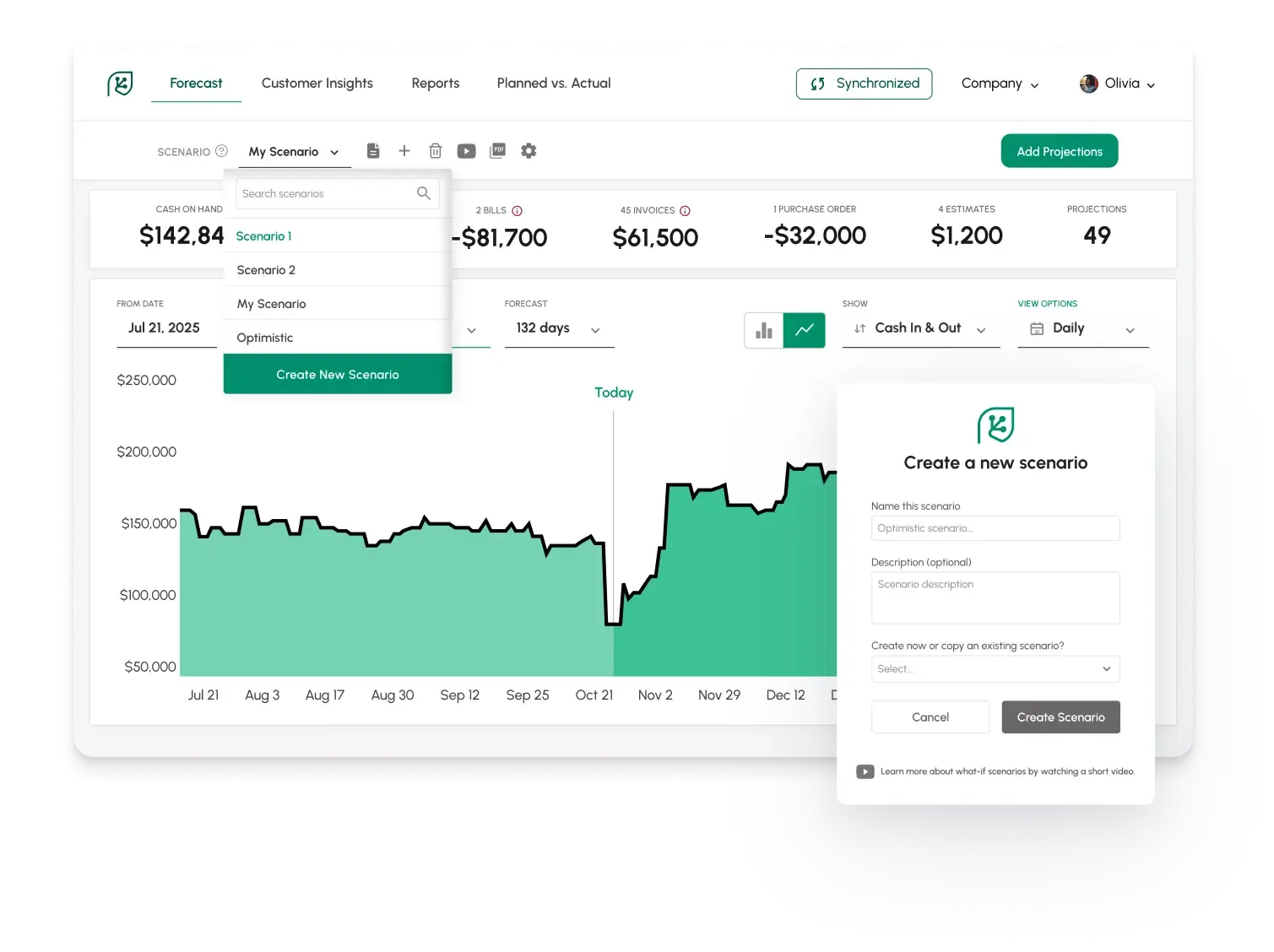
This method should include sensitivity testing. If assumptions change under a different scenario, the value conclusion should change transparently.
Accounting For Intangibles: Recognition And Measurement Rules
Accounting rules focus on what can be recognized and measured reliably. A resource can be valuable to the business and still not qualify for balance sheet recognition.
Internally Generated Vs. Acquired Assets
Acquired assets are often easier to recognize because the transaction price supports measurement. Internally generated resources can be harder to identify, even when they clearly support performance.
The Role Of Amortization In Asset Lifecycle
Some resources have a finite useful life. In those cases, cost is allocated over time through amortization, which affects reported profit patterns and planning.
Understanding Impairment And Its Financial Impact
If expected benefits decline significantly, an impairment loss may need to be recognized, depending on the framework. This reduces the carrying amount and affects the net book value reported on the statements.
Why Intangible Assets Are Vital For Business Valuation
A company’s value is tied to future performance and how durable that performance is likely to be. Intangible assets often explain pricing power, retention, and efficiency differences between similar companies.
Clear ownership, clear terms, and clear metrics reduce uncertainty for buyers and lenders.
The Impact Of Intangible Assets On Your Cash Flow Strategy
Intangible assets can shape predictability. Contracts can reduce uncertainty. Customer relationships can support renewals. Technology can reduce errors and rework.
This is where the meaning of intangible assets matters for finance teams. Better visibility into those drivers improves cash flow forecasting because assumptions are tied to observable inputs rather than guesses.
Cash Flow Frog’s planned vs actual view is useful here because it shows where actual cash timing is drifting from the forecast and what’s driving the gap. That makes it easier to spot issues like late renewals, delayed collections, or contract start dates sliding.
Common Challenges In Managing Non-Physical Assets
Common issues include missing documentation, unclear ownership, missed renewals, and weak visibility into restrictions or obligations. Another challenge is measurement. If teams cannot link a resource to outcomes, value discussions become vague and harder to defend.
A simple way to reduce problems is to assign an owner for each key asset category. Ownership does not mean one person does all the work. It means someone is accountable for keeping records up to date and for escalating risks early.
Leveraging Automation For Better Asset And Cash Visibility
Automation helps by centralizing records and ensuring consistent tracking. At a basic level, it can store key contracts, renewal dates, and proof of ownership in one place.
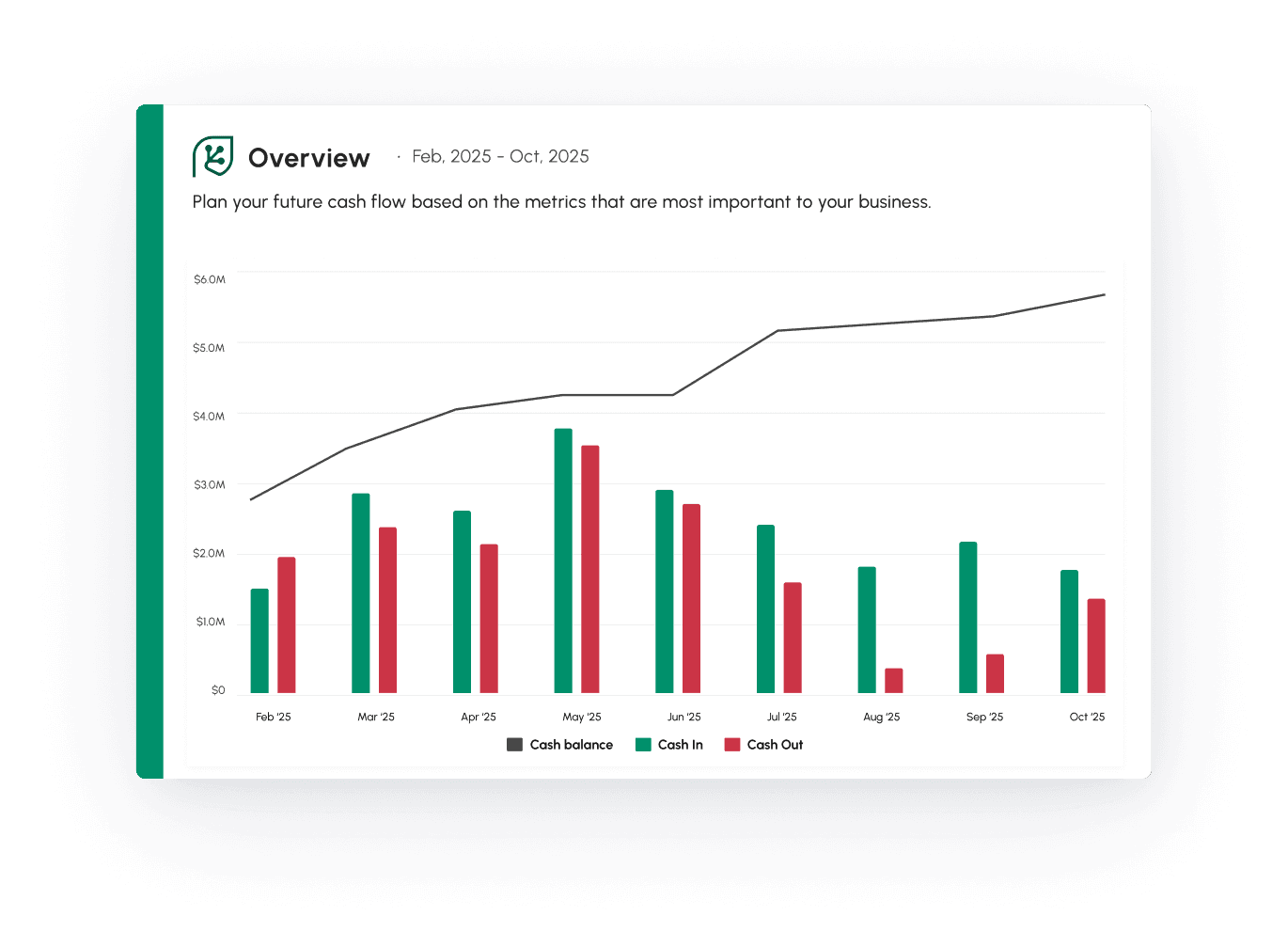
A dedicated cash flow software tool can support a single forecast view by pulling billing schedules and payment timing into planning workflows. That supports stronger financial planning and improves coordination across teams.
Forecasting feature of Cash Flow Frog - Image | Cash Flow Frog
If you want a simple way to connect your contracts, renewals, and timing into one place, Cash Flow Frog can help. You can sign up for free and start building a clearer cash view in minutes.
Summary: Integrating Intangibles Into Your Financial Roadmap
The intangible assets definition isn’t complicated. If you can name it, prove you control it, and show it will keep delivering value, it counts. From there, keep a basic list, save the paperwork in one place, and connect each asset to something measurable.
Once you can answer what are intangible assets without hand-waving are, your reporting is easier, and your plans are a lot more reliable.
Related Terms
FAQ
Looking for more help?
Visit our help center to find answers to your questions about CashFlowFrog.
Trusted by thousands of business owners
Start Free Trial Now