
The Quick Ratio Explained: Formulas, Industry Standards, and Actionable Insights

What is quick ratio, and why does it matter for small business owners, entrepreneurs, and finance teams? It’s a fast way to check if your business can cover its short-term obligations using only liquid assets. In this guide, we’ll explain the quick ratio definition, how to calculate it, how it’s used in the real world, and what your ratio says about your financial health.
What Is the Quick Ratio?
The quick ratio is your business’s way of saying, “We’ve got this,” when the bills come due.
It shows how much immediately available money you have to cover short-term expenses, like rent, payroll, or supplier payments, without needing to sell inventory or wait on future sales.
Here’s the quick version:
- It checks how much cash (or near-cash) is on hand
- Includes what customers already owe you
- Counts investments that can be turned into cash fast
- Compare that to what you owe in the near term
Understanding what is quick ratio helps you stay ready for whatever comes up. It’s a strict but simple look at whether your business can handle its short-term obligations today without delay or guesswork.
The quick ratio definition leaves out things like inventory or equipment, focusing only on assets you can actually use now. The meaning of quick ratio comes down to one thing: short-term stability you can count on.
Why Is This Metric Important for Your Daily Operations?
Staying on top of your expenses is part of running any business. And it all comes down to liquidity and smart cash flow forecasting. What does quick ratio indicate? Whether you have enough cash ready to handle today’s obligations without stress. It’s a number that speaks directly to your day-to-day peace of mind.
Assessing Your Ability to Pay Bills on Time
There’s nothing fun about scrambling to cover a bill or choosing which payment can wait. That’s where the quick ratio steps in. It gives you a clear picture of whether your business can keep up without skipping a beat.
Here’s how it helps:
- Tells you if there’s enough ready cash to pay what’s due soon
- Flags cash flow gaps before they turn into stress
- Keeps your daily operations smooth
- Helps you run your business with fewer surprises and more control
When your quick ratio looks good, it’s easier to cover your bills and keep the business running without feeling like you’re always behind.
Know what your cash can cover before it’s too late. Sign up for Cash Flow Frog and see where your business stands in seconds, not weeks.
Sign up todayHow Lenders and Suppliers View Your Liquidity

Image: Potential investors and lenders discussing financial ratios of a business | Vitaly Gariev via Unsplash
Before anyone lends you money or extends payment terms, they want to know one thing: can you pay them back on time?
Here’s how lenders and vendors use the quick ratio to size things up:
- It’s one of the first numbers they check on your balance sheet
- A healthy ratio shows you can cover what you owe without delay
- A low ratio might raise red flags or lead to tighter credit terms
- A strong ratio could get you better rates, longer terms, or more trust
What does the quick ratio show them? Whether your business is financially steady or at risk of falling behind on payments. It’s a small number that can have a big impact on your relationships.
How to Calculate the Quick Ratio?
The meaning of the quick ratio becomes clearer once you see how it’s calculated. It’s not just a finance formula, but a practical way to check how prepared your business is to handle short-term expenses. Here's how to calculate it.
Identifying the Assets You Can Use Immediately
Not all of your current Assets are equal when it comes to paying the bills. For the quick ratio, you only count what you can actually use right now.
That includes:
- Cash in the bank
- Cash equivalents like short-term investments
- Accounts receivable, you're expecting soon
- Marketable securities you can sell quickly
These are your “ready-now” resources. If it takes time to sell or convert, like inventory, it doesn’t count. The quick ratio only cares about what’s immediately available to cover what’s coming due.
Understanding Your Current Short-Term Liabilities

Image: Calculating current liabilities | Jakub Żerdzicki via Unsplash
Current Liabilities are the bills you can’t ignore, what your business owes in the next 12 months. To get your quick ratio right, you need to know what’s on the list.
That usually means:
- Rent, utilities, and vendor bills
- Payroll you haven’t paid yet
- Loans due within a year
- Taxes coming up
- Unpaid services or subscriptions
It’s all about knowing what’s due soon, so you can see if your cash (and near-cash) can cover it.
A Practical Example of the Calculation
Here’s a quick ratio example.
You have:
- $20,000 in cash
- $35,000 in accounts receivable
- $10,000 in short-term investments
- $50,000 in current liabilities
The math:
Quick Ratio = (20,000 + 35,000 + 10,000) ÷ 50,000 = 1.3
A ratio of 1.3 means you’ve got $1.30 in liquid assets for every $1 you owe.
Wondering what is a good quick ratio for a company? Around 1.0 to 2.0 is enough to cover your bills without sweating it.
What Is the Difference between the Quick Ratio and the Current Ratio?
The definition of the quick ratio makes more sense when you line it up next to the current ratio. They’re close, but not the same, and knowing how they differ can help you get a clearer read on your business’s short-term health.
Why Is Inventory Excluded from the Quick Ratio?
Inventory helps you make money, but it’s not cash in hand.
Here’s why it’s left out:
- It takes time to sell
- It might lose value
- You can’t count on it turning into cash fast
The quick ratio sticks to your cash and equivalents, those that are ready to use, not what’s sitting on a shelf.
When to Use Each Metric in Your Financial Reports
The quick ratio's meaning is all about speed: how fast your business can cover what it owes. The current ratio casts a wider net, including things like inventory.
Here’s when to use each:
- Use the quick ratio for a sharper, cash-focused view
- Use the current ratio for a fuller picture of short-term assets
- Tracking both gives you a smarter read on where you stand
Together, they give you a balanced view of your business’s short-term health and stability.
What Is a Good Quick Ratio?
The quick ratio means more when you know what a good one looks like. It gives context to your numbers, so you’re not just guessing whether things are okay or a little too close for comfort.
Average Benchmarks across Different Industries
Knowing what is quick ratio in finance is helpful, but knowing how yours compares is even better.
Here are quick ratio examples that are typical in some industries:
| Industry | Typical Quick Ratio | Why It Looks Like That |
|---|---|---|
| Retail | 0.5 – 1.0 | Lots of cash tied up in inventory |
| Tech / SaaS | 1.2 – 2.0 | Low inventory, more cash and receivables |
| Manufacturing | 1.0 – 1.5 | Balanced between cash and raw materials |
| Professional Services | 1.5 – 2.5 | Service-based, usually higher liquidity |
What’s considered “good” really depends on your business, but these numbers help you see if you’re in a healthy range or drifting off track.
Risks of a Ratio That Is Too Low or Too High
When your quick ratio is way off, either too low or too high, it usually means something’s out of balance.
If it’s too low:
- You might be running short on cash
- Bills could start backing up
- It may raise red flags with lenders or suppliers
If it’s too high:
- You could be sitting on cash that’s not doing much
- Growth plans might be taking a backseat
- You might be playing it safer than you need to
In the end, it’s about finding that middle ground, enough to stay stable, but not so much that your money goes unused.
Built for business owners, finance, and accountants who need to stay sharp. Explore our Planned vs Actual feature to catch changes early and adjust with confidence.
Explore our Planned vs Actual featureFactors that can Change Your Liquidity Numbers

Image: Financial records and reports | Cht Gsml via Unsplash
Your quick ratio can change faster than you think, even if business seems steady on the surface.
Here’s what can shake things up:
- Customers paying late slows down your cash flow
- Surprise expenses throw off your short-term balance
- New short-term debt adds pressure to your obligations
- Spending too fast can drain your reserves
- Slow invoicing means slower money coming in
It doesn’t take much to tip your financial liquidity, so keeping an eye on these can save you a headache later.
Ways to Improve Your Business's Quick Ratio
If your quick ratio’s running low, it doesn’t take much to turn things around. A few small changes can make a big difference in how your business handles cash.
Improving Your Accounts Receivable Process
The definition of the quick ratio only counts cash you actually have, so unpaid invoices don’t help.
To speed up payments:
- Send invoices right away
- Follow up early, not late
- Offer a small discount for quick pay
- Use easy, online payment options
Getting paid faster keeps your quick ratio healthy and your cash flow steady.
Managing Short-Term Debt and Expenses
Too much short-term debt or spending can drag your quick ratio down fast. Keeping it lean helps you stay flexible.
Here’s how:
- Refinance short-term loans if you can
- Cut non-essentials (for now)
- Delay big purchases that can wait
- Keep an eye on expenses so nothing catches you off guard
Small shifts here can make a big difference in how solid your ratio looks.
See how our forecasting feature keeps you a step ahead. Try our Cash Flow Forecasting for smarter planning.
Try Cash FlowUsing Technology to Monitor Liquidity in Real-Time
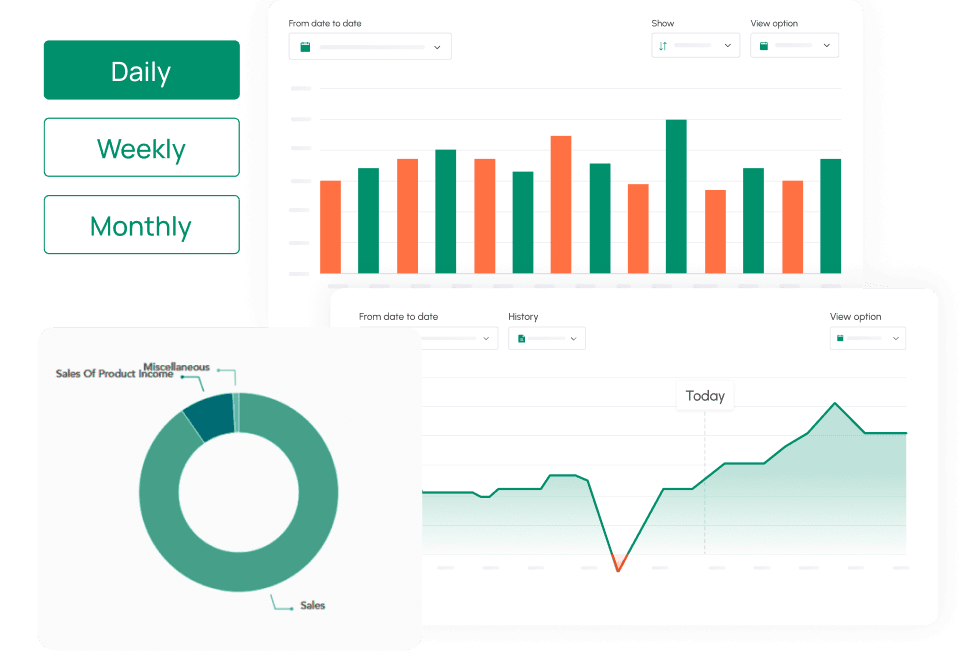
Image: Cash flow analysis | Cash Flow Frog
Quick ratios can shift fast. Tech helps you stay one step ahead without the spreadsheets.
Why it matters:
- Cash flow changes quickly. Real-time tools catch dips before they become problems.
- Less guesswork. Automation keeps your numbers current.
- Smarter moves. You can act fast with confidence.
What helps:
- Live dashboards for a clear view of your quick ratio
- Automated cash flow tools that sync with your books
- Alerts when things start slipping
Cash flow software like Cash Flow Frog makes it simple to perform a balance sheet analysis.
Conclusion: Using Ratios for Better Financial Decisions
The quick ratio keeps you grounded. It shows if your business can cover what’s coming, and where you might need to adjust.
Check it often, stay flexible, and let it guide better day-to-day calls. Simple as that.
Related Terms
FAQ
Looking for more help?
Visit our help center to find answers to your questions about CashFlowFrog.
Trusted by thousands of business owners
Start Free Trial Now