
What Is Petty Cash? Definition, Examples, and How to Track It

The petty cash meaning is simple, yet powerful for daily operations. It refers to a small amount of physical cash that businesses keep on hand for minor expenses. For example, have you ever needed to pay for emergency office supplies or quick courier fees? That is exactly where petty cash comes in.
Let’s break down the definition of petty cash, look at practical examples, and explore how to track it the right way.
What Is Petty Cash? (Meaning and Purpose)
So, what is petty cash exactly? The term petty cash is given a definition of a small amount of cash that a business keeps aside to take care of small and routine costs that are not practical to record under a formal payment system. In business, the ultimate petty cash meaning concerns expediency and speed. Businesses use this fund to make small payments instead of making a company check after each small purchase.
In other words, it is controlled cash used for small cash transactions that arise completely out of the blue or on a regular basis.
Why businesses still use petty cash in a digital world
Physical cash is no longer necessary with corporate cards and digital wallets being everywhere. Consider throwing over delivery workers, purchasing emergency snacks in the office, paying low parking rates, or meeting minor repair expenses. Digital tools are efficient, but sometimes you need immediate payment.
Petty cash also reduces administrative work for very small transactions. Because, would you really want to approve a full reimbursement request for a five-dollar purchase?
Petty cash vs cash on hand: what’s the difference?
The petty cash definition in business is a controlled fund with a set limit and a defined purpose. Cash on hand refers to all physical cash a business currently holds. Cash on hand may include register money or daily sales collections. Petty cash is usually a fixed amount managed under the imprest system.
The imprest system means the fund is replenished back to its original balance after expenses are recorded. That structure keeps things organized and predictable.
What Are Examples of Petty Cash Expenses?

Image: Cash From Envelope | Freepik
What does a typical petty cash example look like? Petty cash covers small, necessary business costs. The keyword here is small. These are usually low-value purchases that come up unexpectedly and need to be paid right away without going through a long approval process.
Typical petty cash examples (office, retail, field teams)
Common petty cash examples include:
- Office supplies such as pens and paper
- Postage and courier fees
- Staff refreshments for meetings
- Local transportation fares
- Minor cleaning supplies
- Emergency maintenance materials
If an office manager buys printer ink urgently, that is a classic petty cash example. In retail, a petty cash example could be buying packaging materials quickly. For field teams, it might cover fuel for short trips or small equipment parts.
These are everyday situations where petty cash keeps work moving.
Expenses that should NOT go through petty cash
Not all the items are to be in the petty cash box. Never use petty cash to make large-equipment purchases, payroll, vendor invoices, recurring series of subscription fees, or big travel bookings. Instead, one should use a corporate card or a formal approval system in case the amount is considerable.
Clear business spending controls protect your company from confusion and risk.
How a Petty Cash Fund Works (Step by Step)

Image: Meeting About Finance | Freepik
Understanding what petty cash is becomes easier when you see how it works in practice. Most companies follow a structured approach to petty cash management.
1. Setting a petty cash limit
Management should set a fixed amount for the fund. This could be $ 100, $ 300, or more, depending on company size and needs.
So, the amount should match typical small cash expenses. Too low and you will have it replenished. Excessive and you create more chances of abuse.
2. Assigning a custodian and access rules
Designate the custodian of petty cash. The duties of this individual include protecting the cash, granting small payments, receiving receipts, and keeping records of expenses.
Clear cash handling procedures are essential. Only authorized staff should access the fund. Defined internal controls reduce errors and misuse.
3. The petty cash cycle (pay → record → replenish)
The petty cash cycle usually follows three steps. Pay for the expense. Record the transaction. Replenish the fund.
Under the imprest system, the balance always returns to the original amount. A simple petty cash formula explains it clearly: Starting balance minus expenses equals remaining cash.
When the remaining cash runs low, the company reimburses the total of recorded expenses. This restores the fund to its initial balance. Using this petty cash formula keeps accounting clean and structured.
If you want deeper insight beyond manual spreadsheets, you can use Cash Flow Frog. It offers features such as cash flow forecasting and future cash balance insights, scenario planning for cash flow decisions, and comparison of forecast vs. actual cash flow results.
Petty Cash Accounting Basics

Image: Managing Finance | Freepik
The definition of petty cash in accounting includes proper journal entries. When the fund is created, the petty cash account is debited, and the main cash account is credited.
When replenishing, expenses are recorded in their respective expense categories, such as office supplies or transportation.
Accurate expense tracking ensures financial statements reflect true business costs. Even though amounts are small, they still affect overall profitability.
So, if you manage finances for multiple clients, you can use Cash Flow Frog for accountants and bookkeepers to streamline reporting, improve cash flow visibility, and deliver more accurate, forward-looking forecasts to your clients.
Petty Cash Management: Controls That Prevent Losses
Without proper petty cash management, small leaks can turn into serious financial issues. Strong internal controls protect your business.
Receipt rules and documentation
Clear documentation is the foundation of effective petty cash management. Without consistent records, even small cash expenses can create confusion and weaken your internal controls. Setting firm documentation standards protects both the business and the employees handling the funds.
Every petty cash transaction should include:
- A receipt
- A clear description
- The date
- The amount
- The employee's name
No receipt, no reimbursement. This simple rule significantly reduces misuse and discourages informal or undocumented spending. When everyone knows that proof is required, accountability becomes part of the daily routine rather than an afterthought.
Spending categories and approval workflow
Define clear expense categories such as office supplies, transportation, meals, and maintenance. Set spending limits per transaction. Manager approval in some companies is on a threshold level.
An approved workflow enhances control of business spending and maintains petty cash.
Physical security (lockbox, access logs)
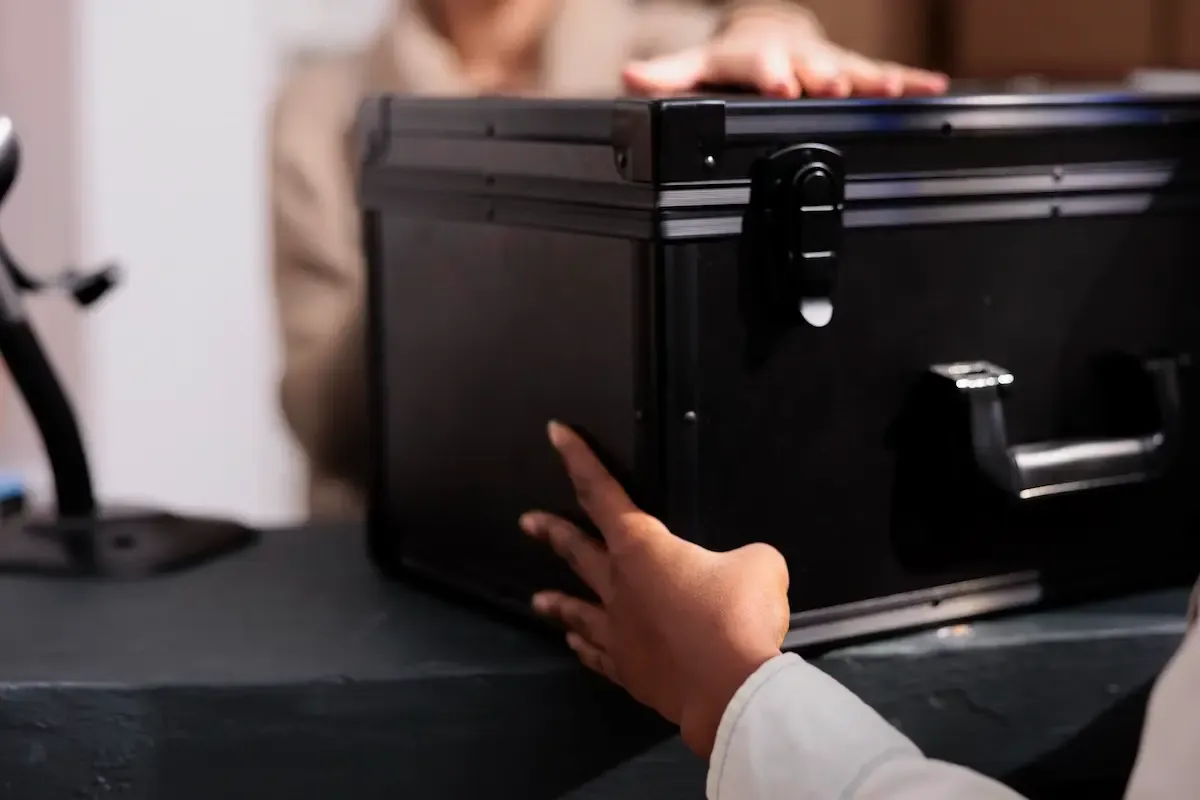
Image: Cash Lock Box | Freepik
The box of petty cash must be kept in a locked box of cash or a locked drawer. Only authorized persons should access it. In case several individuals are communicating with the fund, keep an access log. These cash handling processes minimize the chances of theft or loss.
If you need further assistance with petty cash management, you can check platforms such as Cash Flow Frog. They offer tools that enable you to bring all the information together, enhance the visibility of cash flow, and ensure that even minor expenses are represented in precise financial forecasts.
Petty Cash Reconciliation (How to Balance It Properly)
Reconciliation helps to make sure your records are in line with reality. In order to balance the petty cash, count the cash left, add all the receipts, and compare the amount of cash and receipts totaled to the amount of original funds.
When there is a mismatch of numbers, then investigate. Regular reconciliation enhances internal controls and increases the quality of expense tracking.
Most of the businesses balance monthly, but weekly reconciliation clearly provides closer supervision and helps catch discrepancies before they turn into larger issues.
How Petty Cash Impacts Cash Flow Visibility

Image: Accounting Working on Finance | Freepik
You might think petty cash is too small to influence financial planning. In reality, small cash expenses can affect your numbers more than you expect.
Small expenses add up (why categorization matters)
Small expenses that are not categorized correctly will affect the report and hide the cash flow. Distinct cost categories make sure that all operations are marked properly. This is of particular significance in regard to the precise forecasting of cash flows. Greater classification implies greater understanding.
However, when it comes to actually determining the impact that the little amounts of money have on your estimates, you can use a good cash flow forecasting tool to the rescue. It lets you simulate various scenarios, track long-term trends, and build your cash flow projections based on actual data rather than guesswork.
Forecasting petty cash (weekly/monthly baseline)
Check the historical petty cash expenditure. Approximately what do you spend every week or month? Are there seasonal patterns?
Setting a baseline is helpful in planning and making smarter decisions. A reliable cash flow software can be used to easily combine small amounts of cash with other financial records.
Petty cash leakage: the silent budget killer
The leakage is brought about by loss of receipts, misclassification, and disregard of limits.
In the long run, these minor loopholes decrease profitability. Effective management of petty cash eliminates hidden losses and enhances the visibility of the cash flow as a whole.
To estimate such costs, you can find tools that will help in a systematic cash flow forecast, like cashflowfrog.com/features/forecast/ is one of these.
For pricing details and automation options, you can visit cashflowfrog.com/pricing/.
Petty Cash vs Corporate Card vs Expense Reimbursements

Image: Business Bills and Receipts | Freepik
Each method serves a simple yet clear purpose.
Petty cash is best suited to low-value and immediate payments, as well as minor working requirements. The use of corporate cards would best suit online purchases, travel tickets, and recurring costs. Occasional employee expenses are better adapted to expense reimbursements.
The key is balance. Use both organized petty cash control and digital technology to keep an eye on the money.
Common Petty Cash Mistakes (and How to Avoid Them)
Of course, mistakes can always happen. But the main reason is that the processes are unclear.
- No written meaning of petty cash
- Lack of a clear definition of petty cash procedures
- No assigned custodian
- Poor reconciliation
- Mixing of petty cash and cash on hand
- Inadequate documentation
Clearly, these issues can be avoided by developing written guidelines, training employees, and revising procedures on a regular basis.
Summary: When Petty Cash Helps (and When It Hurts)

Image: Cash and Calculator | Freepik
So, what is the petty cash meaning in practical terms? It is conveniently supported by a structure.
The definition of petty cash refers to a small, controlled fund for daily expenses. When it is properly handled, petty cash contributes to the seamless functioning of a business and timely payments. It causes leakage and confusion when not addressed or managed effectively.
Ask yourself: Do you follow up on all the transactions? Are you consistent with reconciliation? Do you have effective internal controls?
If your answer is yes, then petty cash is working in your business. Otherwise, then it is time to simplify your strategy.
Related Terms
FAQ
Looking for more help?
Visit our help center to find answers to your questions about CashFlowFrog.
Trusted by thousands of business owners
Start Free Trial Now