
Current Assets Explained: Meaning, Types, and How They Work
 Ariel Gottfeld
What are current assets? Current assets are short-term assets that a company expects to convert into cash or use in the business within one year. They are crucial to keeping operations going, paying bills when they come due, and managing cash flow in good shape.
Knowing how to read current assets is important in helping business owners, managers, and investors evaluate liquidity, stability, and short-term financial strength.
Definition: What Are Current Assets?
Current assets are those assets whose conversion into cash, sale, or consumption is expected during a single operating cycle or in 12 months, whichever is longer. These assets are necessary for the company's daily operations and represent the most liquid part of the company’s balance sheet.
To put it simply, the meaning of current assets is “resources a business can quickly turn into cash.” This encompasses cash on hand and also other short-term assets such as inventory and accounts receivable.
In the eyes of accountants, current assets in a business signify liquidity, accessibility, and operational usefulness traits rather than long-term investment value.
So when people ask what current assets in business are, the answer is: they are the financial fuel that keeps a company operating without interruption.
Current vs Non-Current Assets
Understanding this distinction helps clarify a company’s financial position at a glance.
What is a current and non-current asset?
A proper understanding of financial reports requires probing into the distinction between current and non-current assets.
- Current assets are short-term assets that are to be used up or turned into cash within a year.
- Non-current assets (also referred to as long-term assets) represent the resources a company intends to exploit for over a year, like land, machinery, or stocks bought for a long period.
All the listed items can be found in the balance sheet, but each serves a totally different purpose.
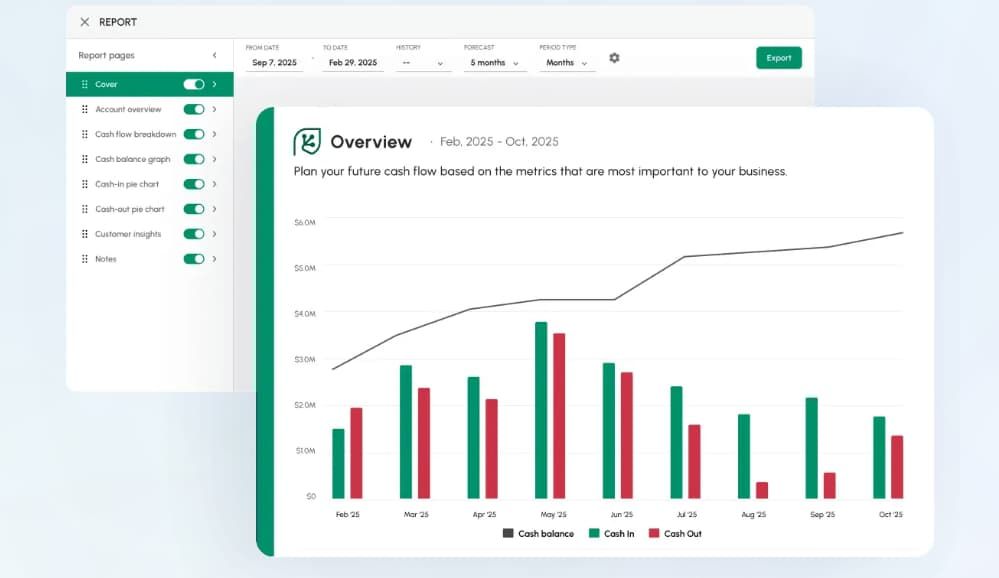 (Image: Accurate Financial Forecasting Tool for Any Business | Cash Flow Frog)
See how your current and non-current assets are separated in real time and what that means for liquidity with Cash Flow Frog
Read moreKey differences in liquidity and purpose
The main difference lies in liquidity and time horizon. Current assets are highly liquid assets that support immediate needs, such as payroll, rent, and supplier payments. Non-current assets are expected to produce value over time.
To summarize:
- Current assets = short-term or working capital assets
- Non-current assets = long-term growth and infrastructure
The difference assists lenders and investors in making their decisions regarding a company's ability to fulfill its short-term obligations without liquidating its long-term assets.
Understanding the difference enables the effective management of funds in business.
Types of Current Assets
There are several types of current assets, each playing a specific role in business operations.
Cash and Cash Equivalents
The most liquid asset is cash. Physical cash, bank balances, and cash equivalents like money market funds or short-term Treasury bills are all included. These funds can be used right away to pay for emergencies and other costs.
Accounts Receivable
Accounts receivable represent the money that customers owe a company for goods or services that have been provided to them. In fact, these are non-cash short-term assets which are anticipated to be changed into cash in the near future and, for quite a few businesses, they make up a substantial part of the current assets in working capital.
Inventory
Inventory includes raw materials, work-in-progress, and finished goods ready to sell. Although inventory must be sold before it becomes cash, it is still a current asset because it helps generate revenue soon. Inventory is one of the standard current assets examples in retail and manufacturing businesses.
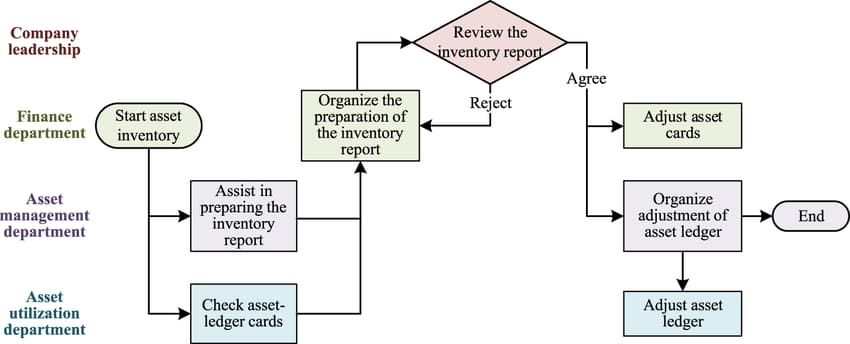 (Source: Fixed asset inventory process diagram | Researchgate)
Marketable Securities
Short-term investments in stocks, bonds, and mutual funds, which are easily sellable, are termed marketable securities. These assets are used to provide liquidity and flexibility, usually with lower returns.
Prepaid Expenses
Prepaid expenses are payments made before using a service, like rent, insurance, or subscriptions. They aren’t cash, but they count as current assets because they bring benefits within the year.
Short-Term Notes Receivable
Short-term notes receivable are written promises that another party will pay the business within a year. They are more formal than accounts receivable and may include interest.
Together, current assets are instrumental in preserving liquidity, facilitating daily operations, and guaranteeing short-term financial stability.
How Current Assets Are Used in Business
Current assets are actively used to keep business operations running smoothly and to meet obligations on time.
Covering operating expenses
Paying regular business expenses is one of the primary uses of current assets. Usually, cash or money from other short-term assets is used to pay for rent, utilities, payroll, and supplier invoices.
Supporting short-term liquidity
Strong current assets ensure that a business can meet short-term obligations without financial stress. Lenders often evaluate current assets to determine whether a company is financially stable in the near term.
Funding daily operations
From purchasing inventory to paying marketing costs, current assets are constantly circulating through the business. This cycle is critical for uninterrupted operations and sustainable growth.
Businesses can function effectively and retain financial flexibility when current assets are managed well.
How to Calculate Total Current Assets
Many business owners ask how to calculate current assets accurately. The process is straightforward and relies on summing all short-term assets listed on the balance sheet.
The current assets formula is:
Cash + Cash Equivalents + Accounts Receivable + Inventory + Marketable Securities + Prepaid Expenses + Other Short-Term Assets
These are the items that make up the current assets calculation formula and can simply be called the current assets formula in accounting resources.
Knowing the right way how to calculate current assets provides companies with the means to reckon liquidity ratios and working capital in a much better way.
Why Current Assets Matter for Cash Flow
Deficient liquid resources can put a business in a difficult situation, even if it is profit-making, but a high level of current assets ensures the flow of money and the coverage of everyday expenses.
Even profitable businesses can struggle without enough short-term assets, highlighting the meaning of current assets in daily cash flow.
Such a clear view helps to pinpoint cash gaps which may result from slow-paying customers, high levels of inventory that tie up cash, or increasing expenses.
By spotting these issues early, companies get the chance to adjust before shortages become serious. On top of that, proper management of current assets makes a firm's position stronger to cope with seasonal changes and unexpected costs without having to rely heavily on short-term loans.
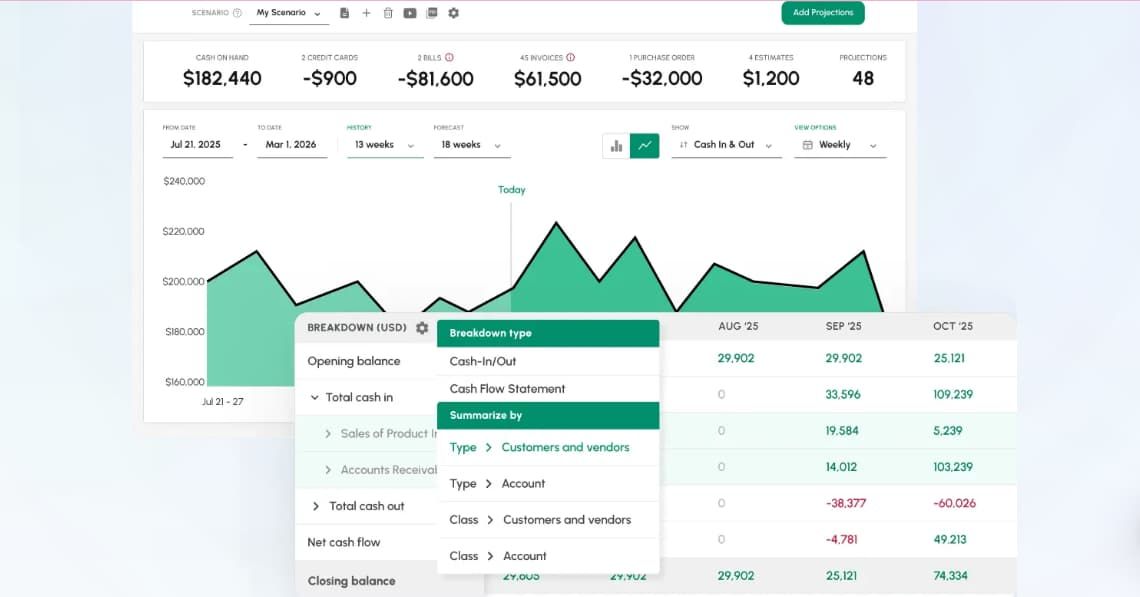 (Image: Accurate Financial Forecasting Tool for Any Business | Cash Flow Frog)
Get a real-time view of how your current assets impact cash flow and prevent shortfalls before they happen with Cash Flow Frog
Read moreCurrent Assets on Financial Statements
Current assets are listed at the top of the assets section on a company’s balance sheet because they are the most liquid resources the business owns and can be converted into cash quickly.
This presentation reflects the current assets definition in business, which focuses on short-term resources used to support daily operations and near-term obligations. The prominent placement allows readers to immediately assess how much value is available to cover upcoming expenses, manage working capital, and evaluate a company’s short-term financial stability.
Each category of current assets, such as cash, accounts receivable, inventory, and prepaid expenses, is shown separately to provide transparency into how liquidity is distributed across the business. Together, these figures form the basis of the formula for current assets, which totals all short-term assets expected to be used or converted into cash within one year and supports accurate liquidity assessment decisions.
Analysts, lenders, and investors use these figures to calculate important financial ratios, including the current ratio and quick ratio, which measure short-term financial strength and operational efficiency, helping clarify what are current assets in business and how effectively they support liquidity and obligations.
Understanding what does current assets include on financial statements is essential for accurate financial analysis. When current assets are interpreted correctly, business owners can make more informed decisions about cash management, working capital, and growth planning.
At the same time, external stakeholders gain confidence in the company’s financial position and stability.
Real Examples of Current Assets
Real-world examples are a great help in grasping the concept of current assets and seeing how they are used in daily business activities. These are the assets that keep on flowing through the business cycle, changing from one form to another as the operations progress.
Some practical current assets examples include:
- Money kept in a business checking account that is used to pay expenses like rent, payroll, utilities, and supplier invoices is referred to as cash. This is the most liquid asset and the basis of daily operations.
- Unpaid customer invoices that will be paid within 30 days are usually referred to as accounts receivable. These are the revenues that have been earned and are likely to be converted into cash shortly, thus having a direct effect on the company's short-term liquidity.
- Inventory waiting to be sold, including raw materials, work-in-progress, and finished goods. While inventory is not cash yet, it is a key short-term asset because it is expected to generate revenue once sold.
- Prepaid insurance for the next six months, which provides future economic benefits within the year. While it is not possible to turn the asset into cash again, it nevertheless lowers future expenses and helps with short-term financial planning.
So, these examples collectively demonstrate the functioning of current assets as short-term assets that are utilized for daily operations, guaranteeing liquidity, and ensuring the business continues to operate without any interruptions.
How to Improve Current Asset Management
Improving management of current assets can significantly strengthen financial performance and long-term financial stability overall.
Strategies include:
- Speeding up accounts receivable collections
- Reducing excess inventory
- Forecasting cash needs more accurately
- Investing idle cash wisely
Proper handling of balance sheet assets provides for increased liquidity, more robust working capital, and lower financial risk.
 (Image: Turn financial data into clear, usable reports | Cash Flow Frog)
Want a Clear View of Your Current Assets? Try Cash Flow Frog Today
Tracking current assets with disconnected tools or spreadsheets is time-consuming, error-prone, and often fails to provide a clear view of what are current assets. To operate effectively, businesses need accurate insight into how cash, accounts receivable, inventory, and other short-term assets are performing and how they impact future liquidity.
Cash Flow Frog provides a clear, real-time visual of cash flow and liquid assets in one simple platform. By aligning insights with the definition of current assets, it shows how short-term assets flow through your company over time by automatically organising financial data and creating forward-looking budgets. This visibility makes it easier to identify cash gaps, plan for future expenses, and make confident financial decisions.
Cash Flow Frog helps you effectively manage what your current assets are today while setting up your company for long-term, sustainable growth with its user-friendly dashboards and scenario planning.
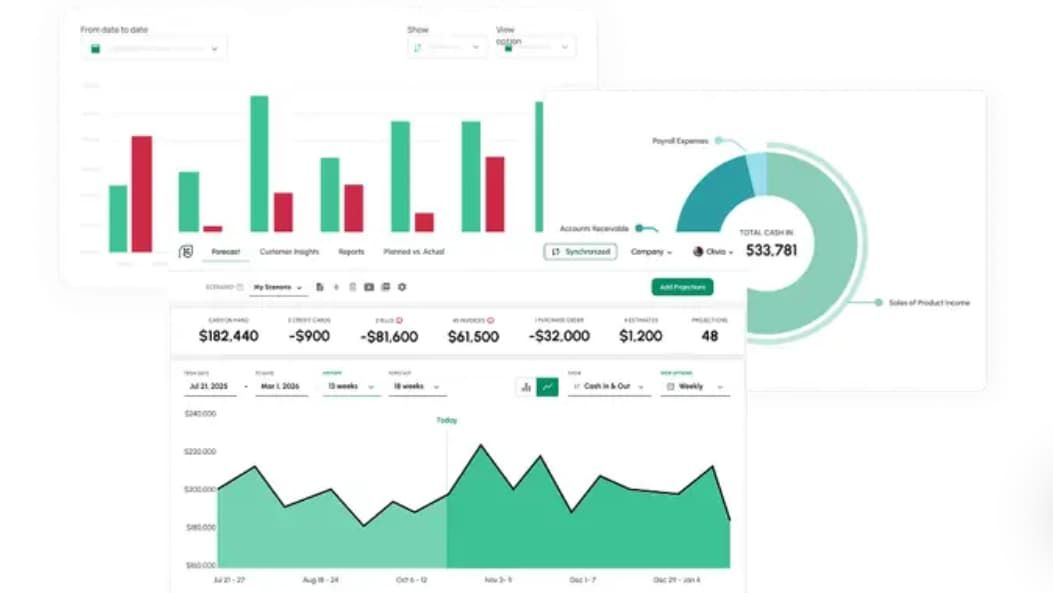 (Image: View various aspects of your cash flow forecast | Cash Flow Frog)
Gain instant visibility into your current assets, cash flow, and future liquidity — all in one platform with Cash Flow Frog
Read more
Current Liabilities: Meaning, Examples, and How to Calculate Them
Read more

What Is a Finance Charge? A Simple Explanation You’ll Actually Use
Read more

Cash Flow Forecasting Template
Read more

Your Guide To Financial Metrics And KPIs
Read more

10 Cash Management Trends for 2026
Read more

10 Best Cash Flow Business Ideas: Build Income That Counts
Read more
FAQ
Trusted by thousands of business owners
Start Free Trial Now